
Track your baby's milestones from birth to age 5 with our easy-to-use checklists; get tips and activities to enhance your child's development; and find out what to do if you are ever concerned about your child's progress.
400+ social-emotional, cognitive, language, and motor developmental milestones
Tailored to your child's age, adjusted for prematurity
Developmental milestone checklists adapted from the Centers for Disease Control and Prevention (CDC) and American Academy of Pediatrics (AAP)
Photos and videos to help parents and caregivers recognize developmental milestones
Tips and activities for supporting early development
Manual and Smart Detection
.png)
.png)
Track Over 400+ Developmental Milestones
Milestones take the guesswork out of parenting
Young children grow so fast that it can be hard to know what to expect. Tracking your child's developmental progress between well-child visits is an important part of monitoring their overall health and well-being. Knowing how your little one is progressing helps you identify if any areas of development may be lagging or if potential problems need to be addressed and discussed with your pediatrician.
Learn More: #MilestonesMatter: Don't Underestimate Developmental Monitoring
90%
of a child’s brain develops by age 5
At age 2 or 3, a healthy brain has up to 2X as many connections as it will have in adulthood. This makes it the perfect opportunity to help shape your baby's future success in both learning and life.
After 5 years, brain eliminates weak connections and strengthens the ones that are reinforced. This process is called pruning and it helps shape your child's brain architecture.
Pathfinder Health has you covered
It can be tough to keep track of all the milestones your child is hitting. But with the Pathfinder Health app, you can easily log in over 400 developmental milestones and monitor your baby's development right from your phone. With simple and easy-to-use checklists, you'll have all the information you need at your fingertips when it comes time for your next well-child visit.
4 Development Areas
12 Age Brackets
400+ Milestones
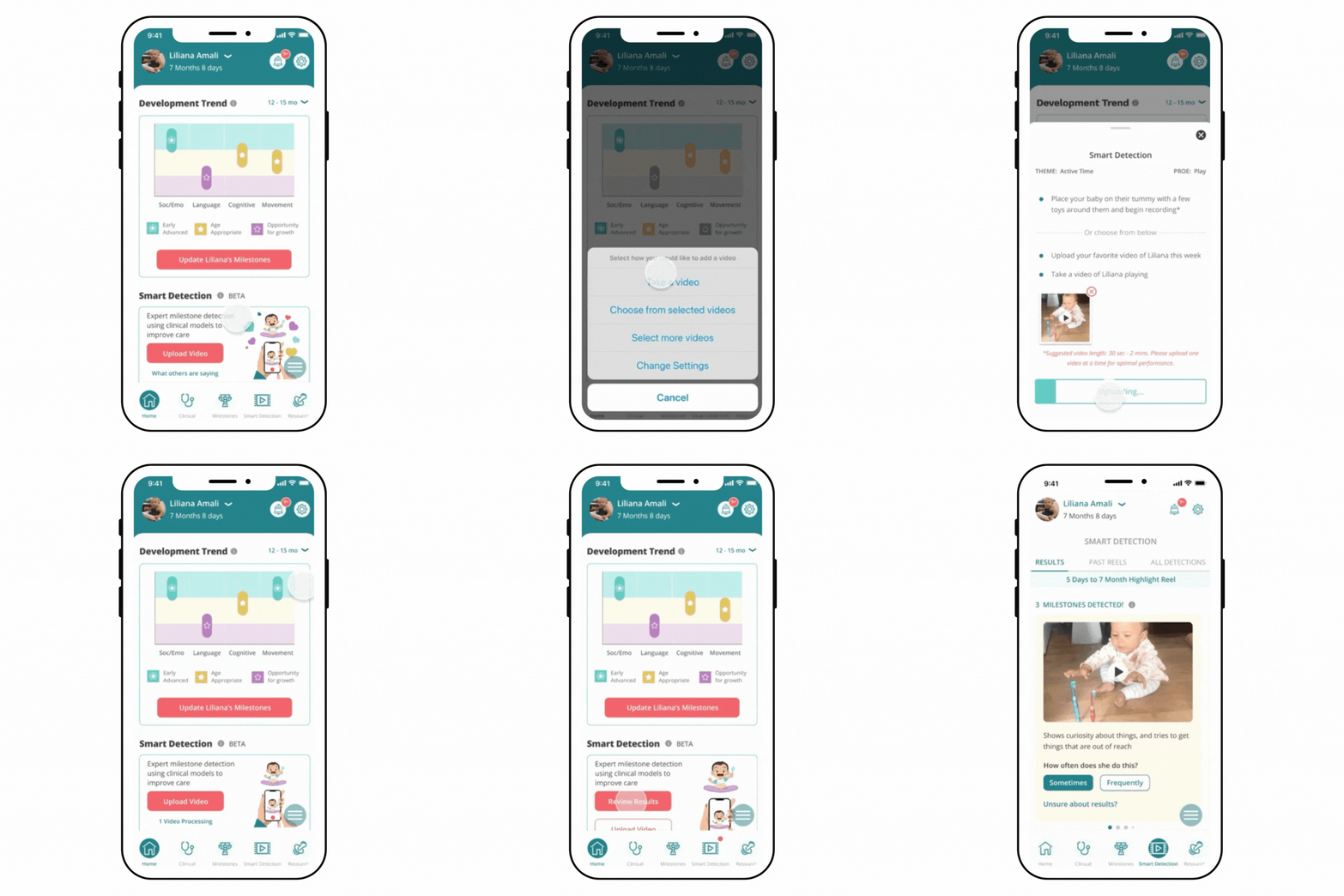
Smart Detection

Developmental Trend
Keeping track of your child's development can be overwhelming. But with our beautiful charts, understanding children's development has never been easier!
Our beautiful and easy-to-read charts provide you with a visual summary of your child's development and peace of mind knowing you can catch any potential issues early on, or simply celebrate those special achievements with your little one.
By updating developmental milestones weekly, you can ensure the most accurate representation of your child's progress.


Manual Monitoring
Child development is a complex but fascinating process that involves all four domains working together to help children become successful adults.
-
Physical milestones include learning how to sit up, crawl, walk, run, and jump.
-
Cognitive milestones are about understanding information and acquiring knowledge.
-
Social/Emotional milestones cover socialization, communication, social responsibility, empathy, emotional intelligence, resilience, and self-esteem.
-
Language milestones cover understanding and using words.

See what's behind and what's coming
Do you want to ensure your child has reached all developmental milestones for their age? It's easy as flipping a switch! Just swap the checklist over to the previous age range, and you can quickly see what important skills they've mastered.
Wondering what exciting new milestones are on the horizon for your little one? Explore their future milestones by switching to the next age range.
Additional Help
-
Photos and videos to help you recognize developmental milestones. Our photos and videos are here to help you accurately pinpoint each exciting milestone in your child's growth. With our comprehensive visual aids, you'll never miss a beat and be able to celebrate all the amazing accomplishments in your little one's life.
-
Tips and activities for supporting early development. With our expert tips and fun activities, you can help your little one easily reach those all-important milestones. From cognitive and social skills to physical and emotional development, we've got you covered.


Overdue Milestones
With child development, there's no one-size-fits-all approach. Luckily, our app is here to help you stay informed and spot any potential issues early on—no more guesswork or unnecessary worry - just easy-to-follow guidance to help your child thrive.
If you're worried your little one might be falling behind in their developmental milestones, take advantage of our free, clinically-validated screenings (SWYC, M-CHAT) to put your mind at ease.
Share Progress With Your Pediatrician
Say goodbye to traditional checkups and hello to more valuable and data-driven visits.
With just a few clicks, you can invite your physician to join your child's care circle in the app, giving them access to real-time data on your little one's progress. Or you can share progress updates during your next well-child visit. It's the perfect way to take your child's care to the next level!

Frequently Asked Questions
Learn about important benchmarks like when your little one might start walking and talking, and get tips on how to encourage healthy growth and reaching new milestones.
Why is it important to track your baby's development?
It is important to track child development milestones because it helps us understand how a child is growing and developing. Knowing what developmental milestones a child has reached can help us see if they are on the right track for their age group.
This information can also be used to identify any areas that may need extra support or attention so the child can reach their full potential.
What are some common baby milestones?
Here are some of the common infant and toddler milestones that most babies reach in their first 5 years:
1-3 Months: Begins smiling, lifts head while lying on stomach, makes cooing noises.
4-6 Months: Sits up with support, responds to sounds by making sounds or crying, and rolls over.
7-9 Months: Crawls well, stands with support, and transfers objects from hand to hand.
10-12 Months: Walks alone (with help), saying first words (mama or dada).
13-18 Months: Walks well without assistance and speaks several words together like "more juice" and "all gone."
19-24 Months: Runs well without assistance, speaks two to three-word sentences ("I go there").
2 Years Old – Follows simple instructions like "please pick up your toy."
3 Years Old – Knows names of familiar people and body parts; can ride a tricycle; starts playing make-believe games.
4 Years Old - Counts to 10; knows basic colors and shapes; begins writing names or letters.
5 Years Old – Can count to 20; knows days of the week; can speak in complete sentences; begins drawing more detailed pictures.
These are general guidelines, and all children develop at their own pace, so don't be alarmed if your child reaches milestones on a different timeline than what is listed here. It is important to watch for any delays or potential development problems and contact your pediatrician with any questions or concerns.
Download the Pathfinder Health app to monitor your baby's milestones.
When should I start tracking my infant's milestones?
It is important to start tracking your baby's development milestones as soon as they are born. Understanding your baby's developmental needs can help you create an environment that encourages learning and proper growth from infancy all the way into adulthood. Monitoring your baby's progress will allow you to spot any potential issues early on so that effective interventions can be implemented quickly before any further delays occur.
Looking after your child's health is an utterly important aspect of parenting, but it can be challenging.
The most common way for parents to track a baby's development is through well-child checkups with their pediatrician. Well-child visits usually begin within the first week after birth and happen at regular intervals (at least once every two or three months) until age 3. During these appointments, the doctor will assess the baby's growth and development in different areas, such as language skills, gross and fine motor skills, social-emotional behavior, and physical health. Parents can also inform the doctor of any concerns they have about their child's development so that the doctor can provide guidance and advice accordingly.
Pathfinder Health offers a perfect solution to stay informed about your child's development between those crucial visits to the pediatrician. With Pathfinder Health's app, you'll have a clear insight into your little one's development outside the clinic and empower yourself as a parent.
How do I track my child's milestones?
Tracking a child's development milestones can be an important part of parenting. As every child develops differently, it is important to keep track of their progress to ensure they are reaching the milestones they should be.
One way to track how your baby develops is by downloading the Pathfinder Health app. The app provides parents with personalized guidance on what milestones their child should have reached by certain ages. In addition, parents can receive notifications when the next milestone needs to be addressed and can review any developmental delay that may arise over time.
Parents should also monitor their child's physical health and growth, learning and social behaviors, language development, and more through routine doctor visits and assessments. During doctor visits, parents should ask questions about any potential concerns as well as discuss any signs of developmental delays or regression that may have occurred since the last visit.
Another way to track a child's development is by journaling their progress over time. Parents can use this journal to record the age at which the baby hit certain milestones such as rolling over or taking first steps; note any changes in behavior like sleeping patterns; record observations of playtime activities; take photos; or even include drawings from the child themselves. All of these entries will help parents look back at their child's growth and development history and pinpoint potential problems quickly if needed.
By keeping track of your child's development milestones, you'll be able to provide them with the best care possible from infancy into adulthood. This will allow you to intervene if necessary while providing your little one with all the resources they need along the way.
How often should I track my child's milestones?
Staying on top of your child's milestones is important to ensure they are progressing appropriately. The frequency of monitoring should be based on the age and stage of the child, as well as any potential concerns that may arise. Generally speaking, it is recommended that parents track their child's developmental milestones weekly during the first year and monthly after.
Additionally, it is essential to pay attention to any changes in behavior or delays in development that may cause concern. If any issues are identified, or a parent has any doubts about their child's progress, they should discuss them with a healthcare provider immediately. Doctors can assess the situation and advise on the best course of action going forward. Tracking your baby's milestones regularly will help them grow healthy and happy!
What can I do if my child is not meeting developmental milestones?
If your little one is not reaching their developmental milestones at the expected age range, there are some things you can do.
-
Talk with your doctor about what kind of help your child needs. You may need extra support from a physical or speech therapist.
-
Self-refer to Early Intervention Services (EIS)
-
Make sure your child has plenty of opportunities for developmental activities.
What are some activities I can do to help my child reach milestones?
One of the best ways to help your child reach developmental milestones is to provide them with activities that stimulate their physical, intellectual, and social-emotional growth. Children can learn important skills like problem-solving and communication through playtime activities such as stacking blocks, arts and crafts, singing songs, pretend play, and story time. Activities such as outdoor explorations, swimming lessons, and interactive educational games are great for physical development and mental stimulation.
Parents can engage in physical activities such as running, jumping, hopping, playing catch, or kicking a ball around the park to develop motor skills. These simple activities will help strengthen their child's gross and fine motor skills, such as arm and leg movement, hand-eye coordination, balance, and agility.
When it comes to intellectual growth, reading books aloud to your child encourages language development as well as critical thinking skills. Puzzles and other brain teasers can help build problem-solving abilities. Cognitive activities such as counting out loud or playing age-appropriate board games will give your child important practice in both math and logic skills.
Social-emotional growth initiatives include introducing your child to new people in a safe environment so that they can learn how to interact with others appropriately. Teaching them basic manners of politeness (such as saying "please" and "thank you") helps foster good interpersonal relationships, which will benefit them throughout life. Playing cooperative games together can also help teach important lessons about working together towards a common goal.
Overall, engaging in different developmental activities is key in helping your child reach developmental milestones while having fun!
How can I help my child reach their baby milestones?
You can help your child reach their milestones by providing a loving and supportive environment. Encourage them to explore and try new things. Offer praise and positive reinforcement when they do something new or reach a goal. Spend time reading, playing, or engaging in age-appropriate activities for your child. Also, create opportunities for social interaction with other children their age.
For more ideas, download the Pathfinder Health app.
What are some signs that my child is not meeting milestones?
There are a variety of signs that may indicate that a child is not meeting developmental milestones. Parents should be on the lookout for symptoms such as:
-
Delayed speech or understanding of language.
-
Difficulty with fine and gross motor skills.
-
Avoidance of social interaction or interaction with peers.
-
Difficulty with basic concepts such as numbers, colors, shapes, etc.
-
Delays in potty training.
Additionally, if a child does not display self-help skills such as dressing, grooming, and feeding themselves by age 4-5, this could indicate that something may be wrong.
Children reach milestones at varying ages, and it's essential to focus on your child's individual growth rather than comparing them to other children their age. Download the Pathfinder Health app to ensure normal development.
What can I do if I think my child has a developmental delay?
If you think your child has a developmental delay, talk to your doctor or schedule a virtual evaluation at Pathfinder Health. Your doctor or Pathfinder Health's developmental behavioral pediatrician will be able to help you understand what could be causing the delay and suggest strategies to help your child reach their full potential.
What should I do if I'm concerned about my child's development?
If you are worried about your child's development, taking a clinically-validated screening (SWYC or M-CHAT) to confirm your concerns is a good idea. Next, you should send your screening results to your pediatrician or schedule a virtual evaluation with one of Pathfinder Health's developmental behavioral pediatricians. They can help you decide if your child needs extra help or support. Watching and observing how your little one behaves and interacts with other people and their environment is also a good idea.
What can I expect during a well-child checkup?
A well-baby checkup is an important part of keeping your baby healthy. During the appointment, a pediatrician or other healthcare professional checks your baby's general health, growth, and development. The doctor will likely weigh and measure your baby, examine their eyes, ears, nose, and throat, assess their heart rate and breathing rate, vaccinate if needed, and provide guidance on nutrition and lifestyle.
During the visit, you can ask questions about your baby's health or any concerns you may have. You can also talk to the doctor about topics such as feeding schedules and sleep recommendations. The doctor may also suggest additional tests or procedures if they think it is necessary for your baby's health.
In addition to physical examination and screenings, the doctor may also take this opportunity to discuss baby milestones with you. Don't forget to update your baby's developmental milestones in the Pathfinder Health app before your visit. They can provide insight into what progress to expect in areas such as physical development (e.g., rolling over), language skills (e.g., babbling), cognitive skills (e.g., responding to name cues), social behavior (e.g., smiling at others), and more.
Overall, a well-baby checkup is a key step in helping ensure that your little one is happy and thriving!

